 DE
DE

am 18.11.2025 - 12:03 Uhr
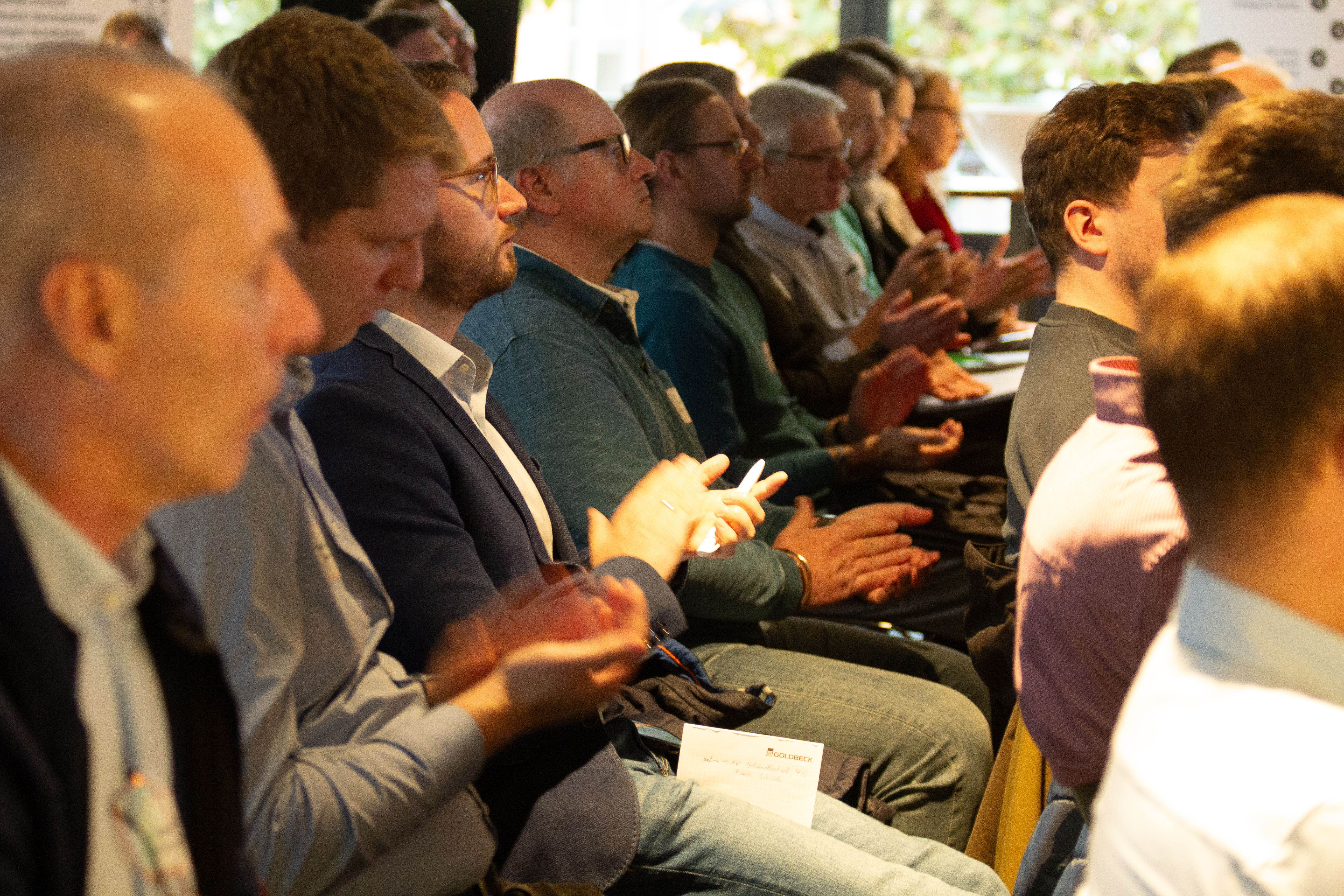
With a record attendance of 160 experts from the fields of planning, construction, and building operations, the “BACtwin Forum 2025” in Mainz impressively demonstrated that the digital twin is no longer a vision of the future, but a living reality. In the LUX Pavilion at Mainz University of Applied Sciences, experts from business, administration, and science discussed the digitization of technical building management—and the role of the BACtwin data model as a key instrument for decarbonization.
What began three years ago with a small circle of insiders has developed into an industry gathering with growing appeal. The event was organized by Mainz University of Applied Sciences in collaboration with AMEV (Working Group for Mechanical and Electrical Engineering in State and Municipal Administrations), the German Facility Management Association (GEFMA), and ICONAG Leittechnik GmbH.
Christian Wild, lecturer at Mainz University of Applied Sciences and managing director of ICONAG, made it clear in his opening speech why BACtwin is considered a successful model: “It gives operators sovereignty over their systems and data – and thus creates independence.” The digital twin is crucial for accelerating the transformation of the building industry, he said. “Decarbonization requires competition and speed,” said Wild.
With a record attendance of 160 experts from the fields of planning, construction, and building operations, the “BACtwin Forum 2025” in Mainz impressively demonstrated that the digital twin is no longer a vision of the future, but a living reality. In the LUX Pavilion at Mainz University of Applied Sciences, experts from business, administration, and science discussed the digitization of technical building management—and the role of the BACtwin data model as a key instrument for
The need to involve not only planners but also building operators from the outset was a recurring theme throughout the event. Jürgen Hardkop, chairman of AMEV, reminded attendees that the planning and construction phases are only short stages in a building's life span of several decades. This makes it all the more important to create data structures for efficient operation at an early stage.
Frank Schröder (Phoenix Contact) and Fabian Naethbohm (Mainz University of Applied Sciences) from the newly founded GEFMA working group “Building Operation 4.0” provided an example of this. Their goal: to move away from reactive action toward data-based decisions. “We have to switch from gut feeling to analytics,” emphasized Schröder. Naethbohm added: “This only works with structured, cross-trade data – and without free text fields.”
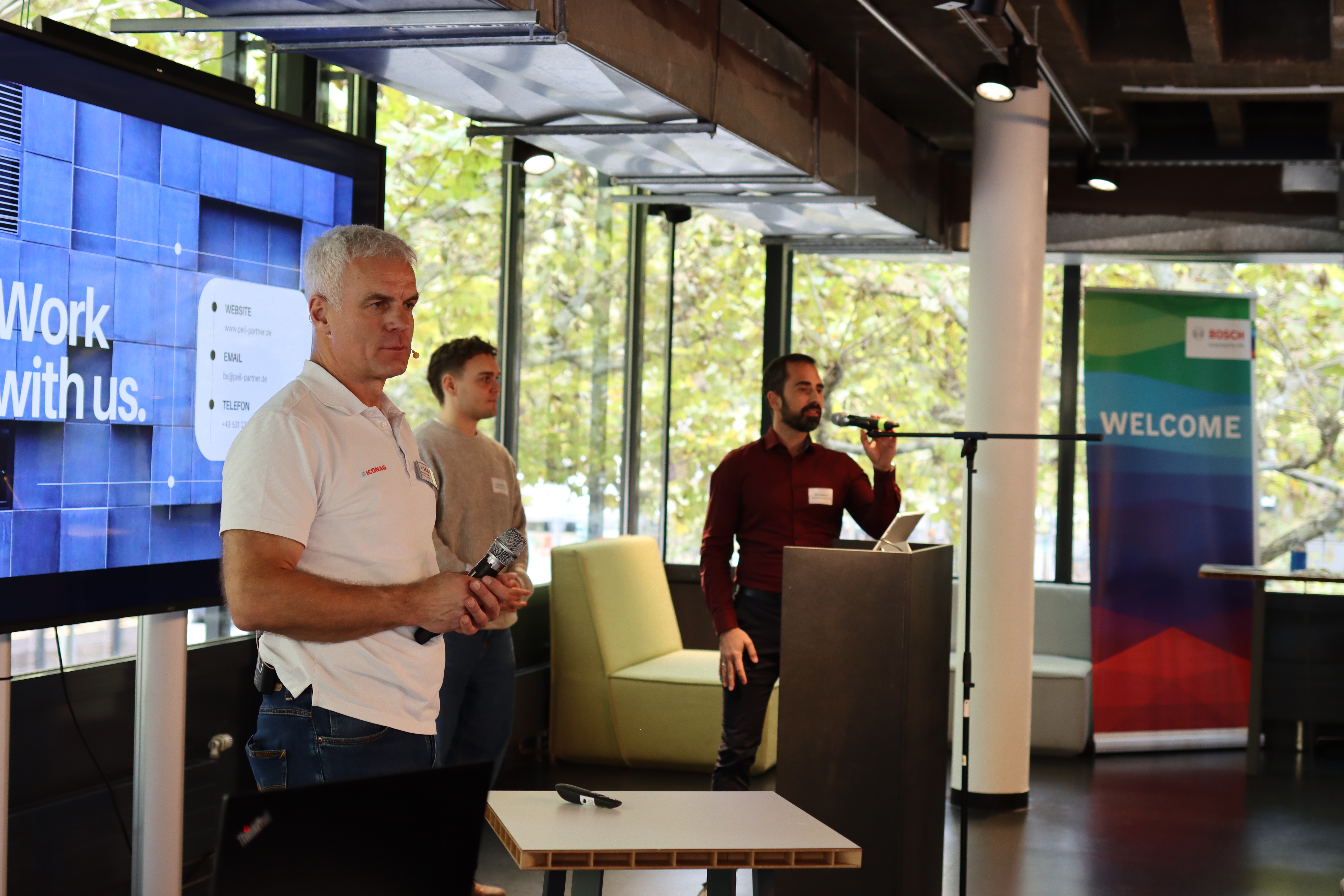
Numerous practical examples demonstrate that BACtwin has long since proven itself in real-world projects. For example, TÜV Süd, Vienna Airport, and the Technical University of Braunschweig are already working with BACtwin specifications. Engineer Paul Perzel (peil und partner, Berlin) reported on his experiences with BACtwin in the Braunschweig university project. Although the introduction of the user addressing key (BAS) was a challenging process, it quickly paid off: “Today, we are benefiting from the insights gained in the first ten months in many projects.”
In Rhineland-Palatinate, too, the digital twin plays a central role in the strategy for reducing CO₂ emissions in public buildings. Professor Thomas Giel from Mainz University of Applied Sciences explained how the state intends to decarbonize its properties by 2030 – supported by the “Campus Schifferstadt” model project. There, building and energy data are combined in a digital twin to control balancing groups and optimize energy flows. “This allows us to save over 70 percent of CO₂ – and that's in existing buildings,” said Giel. “Germany is built, so we have to act on existing buildings.”
Another highlight was the contribution by Dr. Max Both, Entendix GmbH, who showed how artificial intelligence automatically transfers unstructured data from existing buildings into the BACtwin structure. This turns scattered information into a usable digital twin – the basis for monitoring and optimization.
Numerous practical examples demonstrate that BACtwin has long since proven itself in real-world projects. For example, TÜV Süd, Vienna Airport, and the Technical University of Braunschweig are already working with BACtwin specifications. Engineer Paul Perzel (peil und partner, Berlin) reported on his experiences with BACtwin in the Braunschweig university project. Although the introduction of the user addressing key (BAS) was a challenging process, it has
ICONAG is currently developing an automated testing tool for greater transparency in the tendering and testing process. “In the future, builders should be able to see immediately whether BACtwin specifications have been implemented,” announced technical consultant Daniel Rörich. The goal is to combine human readability with digital verifiability, added Eike Hinck from AMEV.
At the end of the forum, the mood was clear: the digital twin has arrived in everyday life – and BACtwin is considered the practical tool for this. “Building automation is complex, but BACtwin creates clarity and structure,” summarized Jürgen Langstein (Delta Controls Germany).
Christian Wild closed the event with loud applause and a quote from Victor Hugo: “Nothing in the world is as powerful as an idea whose time has come.” The date for the next symposium has already been set: On October 27, 2026, the industry will meet again at the LUX Pavilion in Mainz to continue thinking about the future of digital buildings.
Powered by ModuleStudio 1.3.2
